
Blogs
10 Eco-Friendly Kitchen Products Every Home Should Have in 2026

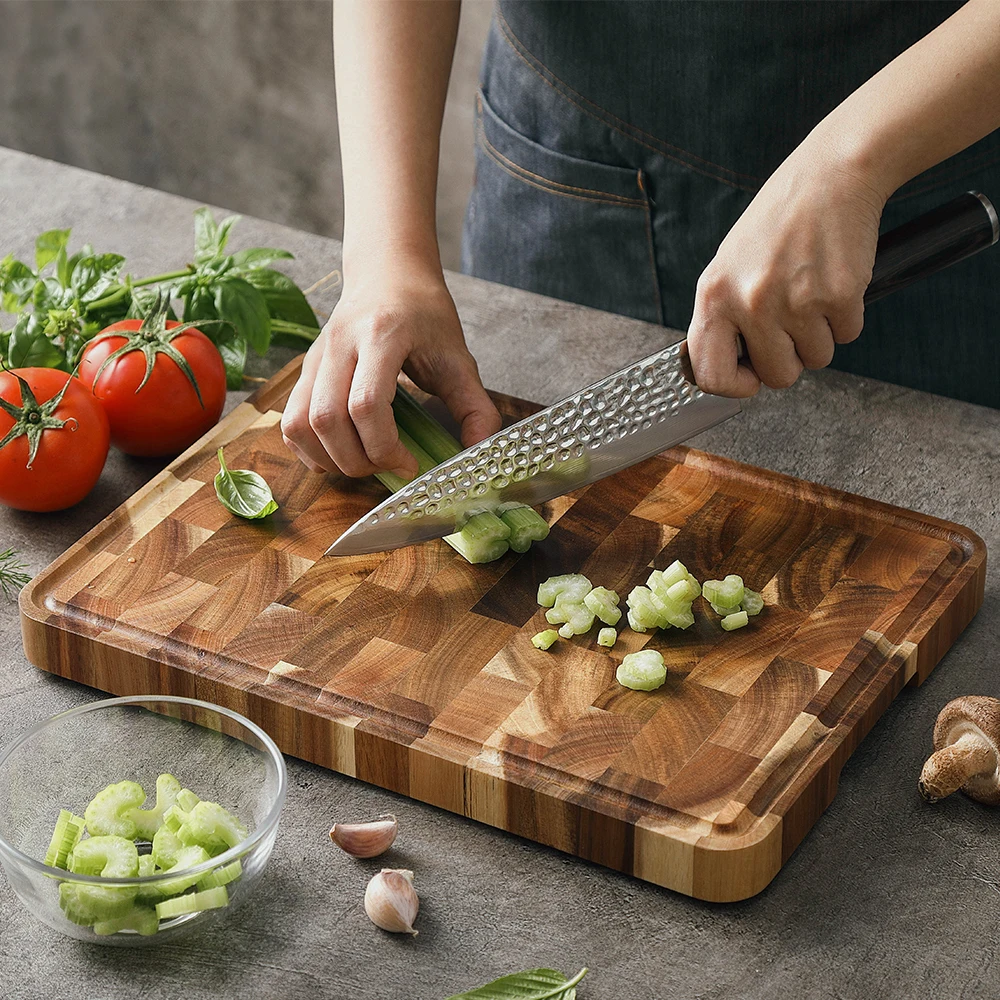
If you’ve been thinking about making your kitchen more sustainable, 2026 is the perfect year to start. The average household throws away hundreds of pieces of single-use plastic from the kitchen each year — and most of it ends up in landfills or oceans.
The good news? Switching to eco-friendly kitchen products doesn’t mean sacrificing quality or style. In fact, natural materials like wood, bamboo, and coconut shell are more durable, safer for food contact, and more beautiful than their plastic counterparts.
At Natural Utensils, we handcraft wooden, bamboo, and coconut kitchenware that lasts for years. In this guide, we share the 10 most important eco-friendly kitchen products every home should own in 2026 — including the ones we make and love.
What Are Eco-Friendly Kitchen Products?
Eco-friendly kitchen products are kitchenware and utensils made from natural, renewable, or recycled materials that reduce environmental harm. They replace single-use plastics and non-biodegradable items with sustainable alternatives like solid wood, bamboo, coconut shell, glass, silicone, and beeswax.
Choosing these products helps:
- Reduce plastic pollution in oceans and landfills
- Lower your household’s carbon footprint
- Avoid toxic chemicals that leach from plastic into food
- Support responsible forestry and sustainable manufacturing
Now, let’s look at the 10 best eco-friendly kitchen products to stock your kitchen with this year.
1. Wooden Cooking Utensils — The Timeless Kitchen Staple
Wooden utensils are arguably the single most impactful swap you can make in a plastic-free kitchen. A good set of wooden spoons, spatulas, and ladles will outlast any plastic equivalent — and they’re completely safe on non-stick cookware.
Why wooden utensils are better:
- Heat resistant — wood doesn’t conduct heat, so handles stay cool
- Non-reactive — won’t leach chemicals or affect the taste of acidic dishes like tomato sauce
- Cookware-safe — won’t scratch non-stick pans or stainless steel
- Naturally antimicrobial — dense hardwoods like teak resist bacteria when cleaned properly
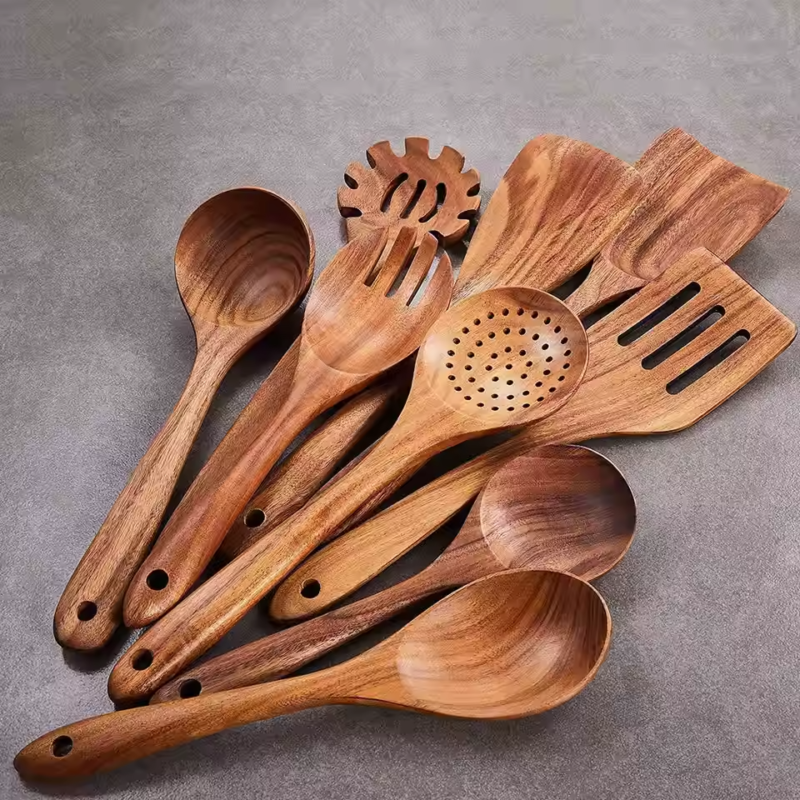
Our 5PCS Natural Wooden Tableware Set includes a spoon, skimmer, spatula, and colander — everything you need to cook a full meal without touching a single piece of plastic. Made from solid natural wood, it’s one of our most popular eco-friendly kitchen bundles.
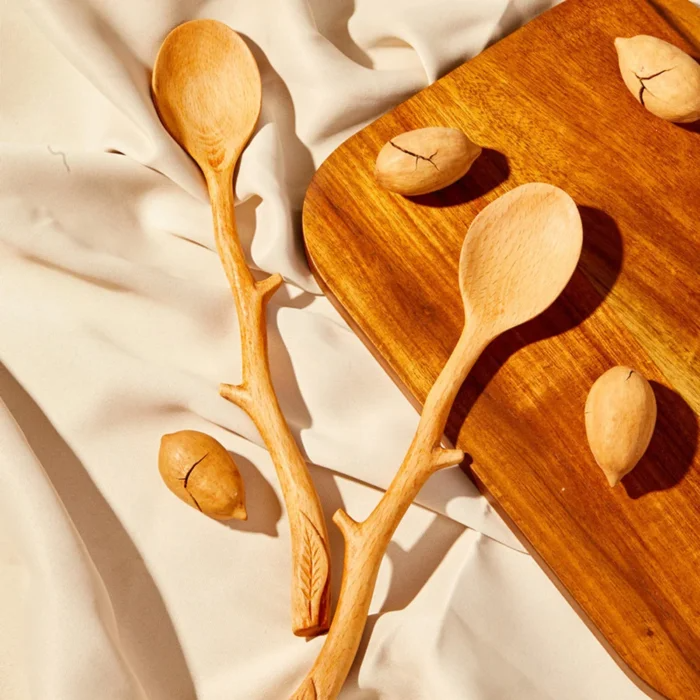
If you’re looking for individual pieces, our Non-Stick Wooden Cooking Spoon and Japanese Beech Wood Branch Spoon are beautifully crafted and built to last.
Pro tip: To extend the life of wooden utensils, hand wash them, dry immediately, and apply a light coat of food-safe mineral oil every few months.
2. Bamboo Kitchenware — The Most Sustainable Material in Your Kitchen
Bamboo is one of the most sustainably harvested materials on Earth. It grows to full maturity in just 3–5 years (compared to decades for hardwood trees), requires no pesticides, and regenerates from its own root system without replanting.
Why bamboo kitchenware is exceptional:
- Grows up to 35 inches per day — the world’s fastest-growing plant
- Requires no fertilizers or irrigation beyond natural rainfall
- Has natural antibacterial properties — ideal for cutting boards and serving utensils
- Lightweight yet stronger than most hardwoods
From bamboo cutting boards to bamboo serving trays, this material delivers a warm, natural aesthetic that fits every kitchen style — from minimalist modern to rustic farmhouse.
Browse our full Artisan Bamboo Products collection to see our handcrafted bamboo kitchenware range.
3. Wooden Serving Bowls and Trays — Elegant and Zero-Waste
Plastic serving bowls are one of the most common sources of microplastic contamination in food. When plastic bowls are scratched or exposed to heat, they release microscopic plastic particles directly into whatever you’re serving.
Natural wood serving bowls eliminate that risk entirely — while looking far more beautiful on your table.
Best wood types for serving bowls:
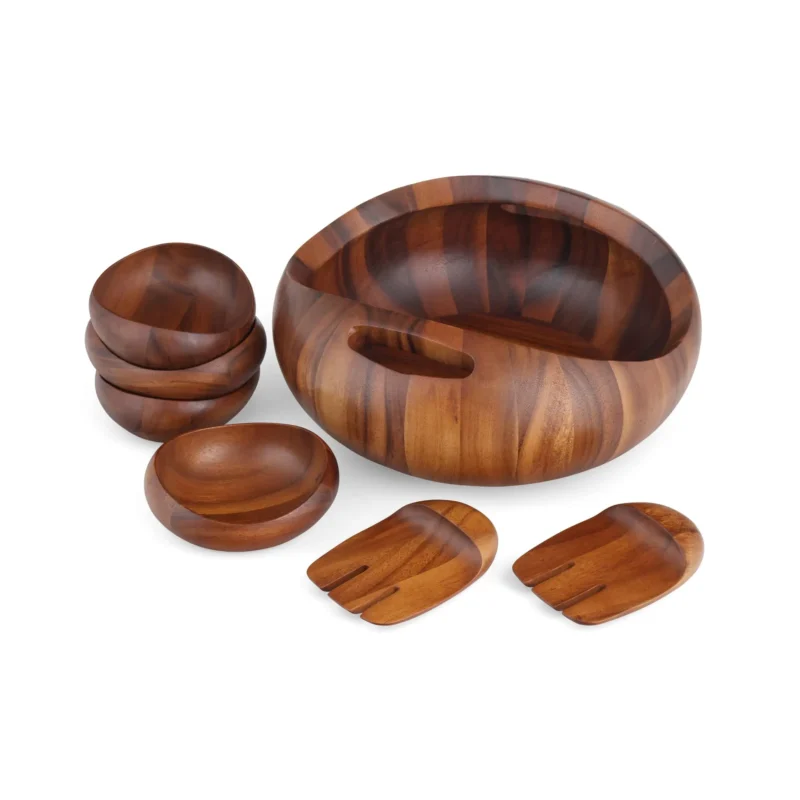
- Acacia wood — dense, water-resistant, with stunning natural grain patterns. Naturally antibacterial.
- Teak wood — exceptionally durable, naturally oily, and resistant to cracking
- Whole/irregular wood — handcrafted pieces with unique organic shapes
Our Natural Wood Fruit Bowl is a handmade irregular serving bowl that doubles as a kitchen centrepiece. Each piece is unique thanks to the natural grain of the wood.
For larger gatherings, our Creative Acacia Wood Tray is perfect for serving nuts, dried fruits, dim sum, and snacks — and it looks stunning in any living room or dining space.
4. Coconut Shell Bowls — Circular Economy at Its Best
Coconut shell bowls are one of the most genuinely zero-waste kitchen products you can own. They’re crafted from coconut shells that would otherwise be discarded after the coconut meat and milk are extracted — giving new life to agricultural byproduct.
What makes coconut bowls unique:
- Made entirely from waste material — no trees cut down
- Each bowl is one-of-a-kind thanks to the natural shape of the shell
- Naturally food-safe with no chemical coatings needed
- Perfect for smoothie bowls, cereals, salads, and snacks
Our Eco-Friendly Coconut Shell Bowls are a customer favourite, sold as a set with wooden spoons. They’re large enough for generous portions and durable enough for daily use.
Coconut bowls are especially popular for smoothie bowl photography — if you follow food accounts on Instagram or Pinterest, you’ve almost certainly seen these in action.
5. Reusable Beeswax Wraps — The Best Plastic Wrap Alternative
The average family uses hundreds of metres of plastic cling wrap every year. Beeswax wraps are the most effective, natural replacement — and once you try them, you won’t go back.
How beeswax wraps work: Made from organic cotton infused with beeswax, tree resin, and jojoba oil, these wraps soften in your hands and mould around any shape — a bowl, a cut avocado, a block of cheese, a sandwich. They stay sealed with gentle pressure and keep food fresh for days.
Key advantages:
- Last up to 12 months with proper care
- Completely biodegradable at end of life
- No harmful chemicals — safe for all food types except raw meat
- Available in multiple sizes to cover bowls, wrap produce, or pack snacks
Care tip: Wash in cool water with mild soap and air dry. Never use hot water — it melts the wax coating.
6. Glass Storage Containers — Safe, Sustainable Food Storage
Plastic food containers are a major source of chemical exposure in the kitchen. BPA and other plasticisers are known to leach into food — particularly when containers are heated in the microwave or washed repeatedly.
Glass containers eliminate this concern entirely.
Why glass wins for food storage:
- Zero chemical leaching — completely inert
- Doesn’t absorb odours or stains (no more tomato-orange plastic containers)
- Oven, microwave, freezer, and dishwasher safe
- Indefinitely reusable and fully recyclable at end of life
- The transparency lets you see contents at a glance
Look for borosilicate glass containers with silicone lids for the best combination of heat resistance and seal quality.
7. Silicone Baking Mats — The Parchment Paper Replacement
If you bake regularly, a silicone baking mat is one of the most cost-effective eco swaps you can make. A single mat replaces hundreds of sheets of parchment paper over its lifetime — typically 3–5 years of regular use.
Benefits of silicone baking mats:
- Non-stick surface — no butter, oil, or parchment needed
- Distributes heat evenly for consistent baking results
- Dishwasher safe and easy to clean
- Reduces waste from single-use baking paper significantly
- Works for cookies, pastries, bread, roasted vegetables, and more
Choose food-grade, LFGB-certified silicone (the higher European food safety standard) rather than the less stringent FDA-only certified versions.
8. Compostable Dishware — For Zero-Waste Gatherings
When you’re hosting a party, picnic, or outdoor event, compostable plates and cutlery make it possible to serve dozens of guests without generating plastic waste.
What compostable dishware is made from:
- Sugarcane (bagasse) — the fibrous pulp left after sugar extraction
- Palm leaf — naturally fallen palm leaves pressed into plates (no trees harmed)
- Cornstarch — biodegradable cutlery that breaks down in composting conditions
- Bamboo fibre — lightweight, sturdy plates and bowls
Important note: For compostable products to actually biodegrade, they need to go into a commercial composting facility — not regular landfill. If compostable items end up in landfill without oxygen, they don’t break down significantly faster than plastic. Set up a composting bin or look for commercial composting services in your area.
9. Wooden Chopping Boards — A Safer, More Hygienic Alternative
Plastic cutting boards develop knife grooves over time — and those grooves harbour bacteria that can’t be removed by washing. Studies have shown that wood cutting boards are actually more hygienic in practice, because bacteria sink into wood fibres and die, rather than surviving in plastic grooves.
What to look for in a wooden chopping board:
- End grain vs. face grain — end grain boards are gentler on knife edges and self-heal minor cuts
- Wood type — acacia, teak, maple, and walnut are all excellent choices
- Thickness — at least 3cm for stability and longevity
- No glue joints — single-piece boards are safest for food contact
Our Premium Acacia Wood Cutting Board features a built-in drain groove to catch juices and a moisture-resistant design that prevents warping. It’s one of the most practical eco-friendly kitchen upgrades you can make.
10. Wooden Utensil Holder — Organise Sustainably
The final piece of a truly sustainable kitchen is how you store your eco-friendly tools. A wooden utensil holder keeps your cooking tools organised, accessible, and displayed beautifully — without the need for plastic desk tidies or acrylic holders.
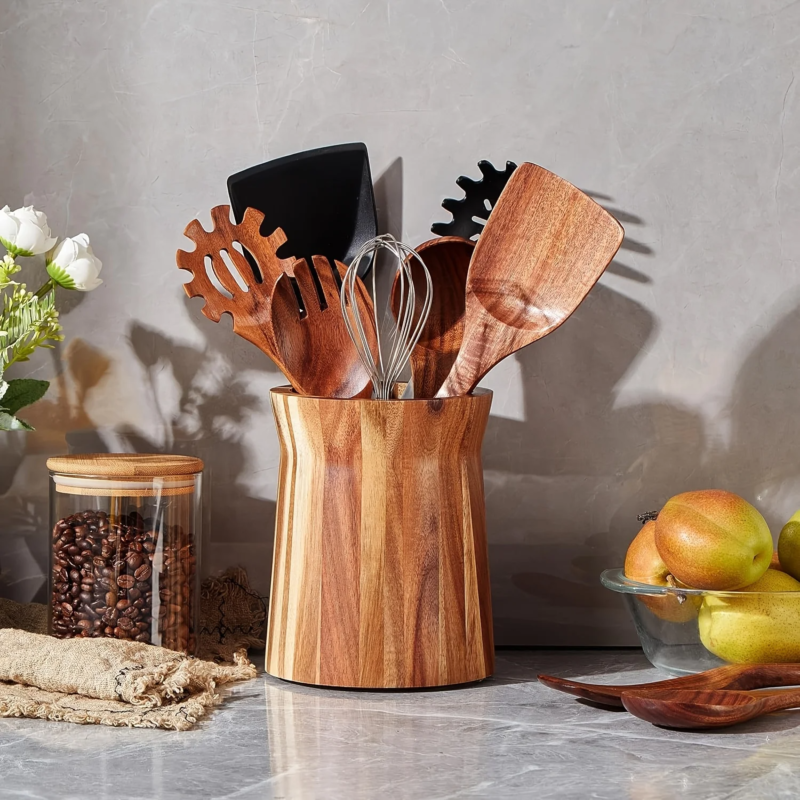
Our 360° Rotating Wooden Utensil Holder is crafted from solid wood and rotates a full 360 degrees so you can reach any utensil instantly. It holds spoons, spatulas, tongs, chopsticks, and more — and it looks just as good as it functions.
How to Build an Eco-Friendly Kitchen in 2026: A Practical Approach
You don’t need to replace everything at once. The most sustainable approach is to replace items as they wear out, rather than discarding still-usable items to buy green alternatives.
Here’s a practical order of priority:
- Start with wooden utensils — cheapest, biggest impact, easiest switch
- Add a wooden chopping board — replaces plastic, lasts decades
- Switch to glass containers — eliminates food-contact plastic daily
- Get beeswax wraps — replaces cling film within weeks
- Replace serving bowls — acacia or coconut shell bowls for everyday use
- Add silicone baking mats — if you bake, instant waste reduction
- Switch to compostable dishware for events — eliminates single-use plastic entirely
Frequently Asked Questions
Are wooden kitchen utensils safe for non-stick pans?
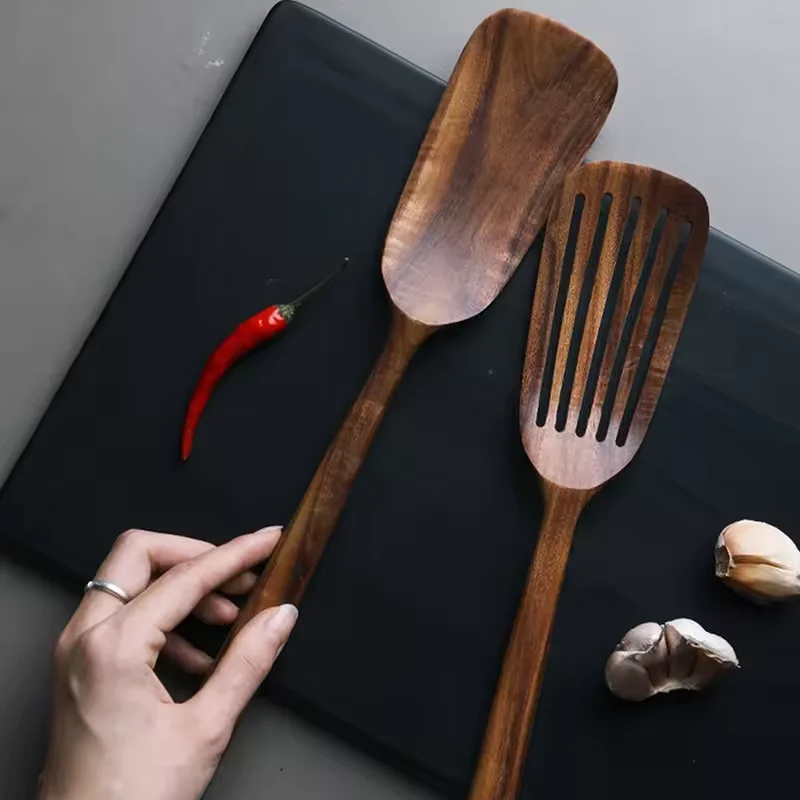
Yes. Wooden utensils are among the safest tools to use on non-stick cookware. They don’t scratch the coating and won’t introduce metal particles into your food. Our Organic Teak Wooden Turner Set is specifically designed for non-stick use.
How long do wooden utensils last?
With proper care (hand washing, immediate drying, occasional oiling), quality wooden utensils last 5–10 years or more. Many of our customers use their sets for many years without needing replacements.
Is bamboo better than wood for kitchen use?
Bamboo is technically a grass, not a wood — which means it’s an even more sustainable resource. It’s also naturally antibacterial and very hard. For cutting boards and serving items, bamboo is an excellent choice. For cooking utensils used over high heat, solid hardwoods like teak and beech hold up especially well.
Can I wash wooden and bamboo kitchenware in the dishwasher?
No — dishwasher heat and prolonged water exposure will warp and crack wooden and bamboo items. Always hand wash with mild soap and warm water, and dry immediately. This is a minor inconvenience that becomes second nature very quickly.
Where can I buy eco-friendly wooden kitchen products?
You can shop our full range of handcrafted wooden, bamboo, and coconut kitchen products at naturalutensils.com. We ship worldwide, with free shipping on orders over $300.
Final Thoughts: Your Kitchen, Your Values
The products in your kitchen reflect your values — what you prioritise for your health, your family, and the planet. Choosing eco-friendly kitchen products made from wood, bamboo, and coconut isn’t about perfection. It’s about making better choices, one swap at a time.
Every wooden spoon you choose over plastic is a micro-decision that adds up. When millions of households make the same choice, the impact is measurable — less plastic waste, less chemical contamination, more support for sustainable craftsmanship worldwide.
At Natural Utensils, everything we make is handcrafted from natural materials, designed to last, and built to replace plastic in your home. Browse our wooden utensils, artisan bamboo products, and wooden gift sets — and take your first (or next) step toward a truly sustainable kitchen.
Written by Emily Smith | Natural Utensils — Handcrafted Wooden, Bamboo & Coconut Products
Last updated: June 2026