
Blogs
Are Wooden Plates Safe? What to Know Before You Buy


If you have ever admired a rustic wooden plate at a farmer’s market or on a friend’s table, you have probably wondered: are wooden plates safe to eat off every day? It is a fair question. Wood is porous, it comes from a tree, and it is not the first material most of us think of when we picture “hygienic.”
The short answer: yes, wooden plates are safe for food when they are made from the right wood, finished with food-safe materials, and cared for properly. In this guide, we break down how wooden plates actually behave around bacteria, what finishes to look for (and avoid), how to clean them, and how to choose a plate that will last for years.
Quick Answer: Are Wooden Plates Safe to Eat Off?
For most households, yes. Solid hardwood plates with a food-grade finish are safe for serving and eating dry and moderately moist foods such as bread, fruit, sandwiches, cheese, snacks, and salads. They are not ideal for very wet, acidic, or long-soaking dishes, and they should never go in the dishwasher or microwave.
The safety of a wooden plate comes down to four things:
- The type of wood
- The finish or sealant
- The condition of the surface (no deep cracks or splinters)
- How you clean and dry it
Is Wood Hygienic? What the Science Says
It is easy to assume plastic or glazed ceramic is cleaner than wood. In reality, the picture is more interesting.
Wood is porous, so it can absorb moisture. Food-safety research on wooden cutting boards, including university studies going back to the 1990s, found that bacteria placed on a wooden surface tended to be drawn into the wood and did not survive well there, while bacteria on plastic surfaces that had deep knife scars were harder to remove. Wood also contains natural compounds that can inhibit some microbes, which is one reason hardwoods have been used for kitchen tools for centuries.
That said, wood is not magic. The U.S. Food and Drug Administration and USDA food-safety guidance both stress that any food-contact surface must be cleaned thoroughly, and wood is no exception. A dirty, cracked, or constantly damp wooden plate can harbor germs just like any other surface.
The takeaway: a clean, dry, well-maintained wooden plate is a perfectly sanitary choice. The risk comes from neglect, not from the wood itself.
What Makes a Wooden Plate Food Safe?
1. Choose the Right Type of Wood
Dense, tight-grained hardwoods are the best choice for plates because they absorb less liquid and resist cracking. Popular options include:
- Acacia: Durable, naturally water resistant, and beautifully grained. A top choice for serving plates and trays.
- Teak: Rich in natural oils, so it resists moisture and warping.
- Beech and maple: Fine, smooth grain and a neutral surface that is easy to maintain.
- Black walnut: Strong and attractive, popular for premium tableware.
- Bamboo: Technically a grass, but hard and dense. Good for lightweight everyday plates.
Avoid soft or resinous woods such as pine for tableware, since they dent easily and can hold moisture and odors.
2. Check the Finish
This is the most important safety question after the wood itself. A food-safe wooden plate should be finished with one of these:
- Food-grade mineral oil
- Natural beeswax or a mineral oil and beeswax blend
- Pure, food-safe plant-based finishes labeled for kitchen use
Be cautious of plates with glossy lacquer, paint, or varnish that does not clearly state it is food safe. Decorative coatings can chip, and you do not want to swallow them. When in doubt, ask the seller what finish was used. A reputable maker will tell you.
3. Look for Smooth, Solid Construction
A safe plate should be free of splinters, rough edges, and deep cracks where food can get trapped. Solid single-piece wood or well-glued hardwood joinery is generally better than thin, cheap pressed boards with unknown adhesives.
Are Wooden Plates Safe for Kids and Babies?
Solid wood plates and bowls are widely used for children because they do not shatter like ceramic or glass. Choose a plate with a smooth, rounded edge and a food-safe finish, check it regularly for cracks or splintering, and retire it if the surface is damaged. For infants and toddlers, always follow the manufacturer’s age guidance and supervise mealtimes.
Are Wooden Plates Safe for Hot Food?
Wooden plates handle warm food well, and wood is a natural insulator, so it will not scorch your hands the way a hot ceramic plate can. However, very hot, soupy, or oily dishes can soak into the wood over time. For daily hot meals, consider using wood for dry foods and a bowl with a more sealed surface for liquids, or place a liner such as parchment or a cloth napkin on the plate.
How to Clean Wooden Plates the Right Way
Proper cleaning is what makes a wooden plate safe over the long run. Follow these steps:
- Wash by hand with warm water and mild dish soap right after use.
- Do not soak. Prolonged water exposure causes cracking and warping.
- Never use the dishwasher or microwave. High heat and moisture will damage the wood.
- Dry immediately with a clean towel, then let the plate air dry standing on its edge.
- Deodorize and sanitize naturally by wiping with a cloth dampened with white vinegar, or scrubbing gently with coarse salt and half a lemon.
- Re-oil regularly. Rub in food-grade mineral oil or beeswax conditioner every few weeks, or whenever the wood looks dry or pale.
Signs It Is Time to Replace a Wooden Plate
- Deep cracks or splits that trap food
- Splintering or rough patches that do not sand smooth
- Persistent odors or dark stains that do not come out with cleaning
- Mold or mildew that returns after cleaning
- Peeling or flaking finish
With good care, though, a quality wooden plate can last for many years.
Wooden Plates vs. Ceramic vs. Plastic
| Feature | Wooden Plates | Ceramic Plates | Plastic Plates |
|---|---|---|---|
| Break resistance | High | Low | High |
| Dishwasher safe | No | Usually yes | Often yes |
| Natural and renewable | Yes | Partly | No |
| Scratches and knife marks | Can be re-sanded and re-oiled | Permanent | Permanent |
| Best for | Serving, snacks, everyday dry meals | All-purpose | Casual, outdoor use |
| Maintenance | Hand wash and oil | Low | Low |
Wood is a strong middle ground if you want durability, a natural look, and fewer synthetic materials on your table, as long as you are willing to hand wash.
How to Choose a Safe Wooden Plate
Before you buy, run through this checklist:
- Is it made from solid hardwood or quality bamboo?
- Does the seller state a food-safe finish?
- Are the edges smooth and the surface free of cracks?
- Is it free from paint, heavy lacquer, or unknown coatings?
- Does it come with care instructions?
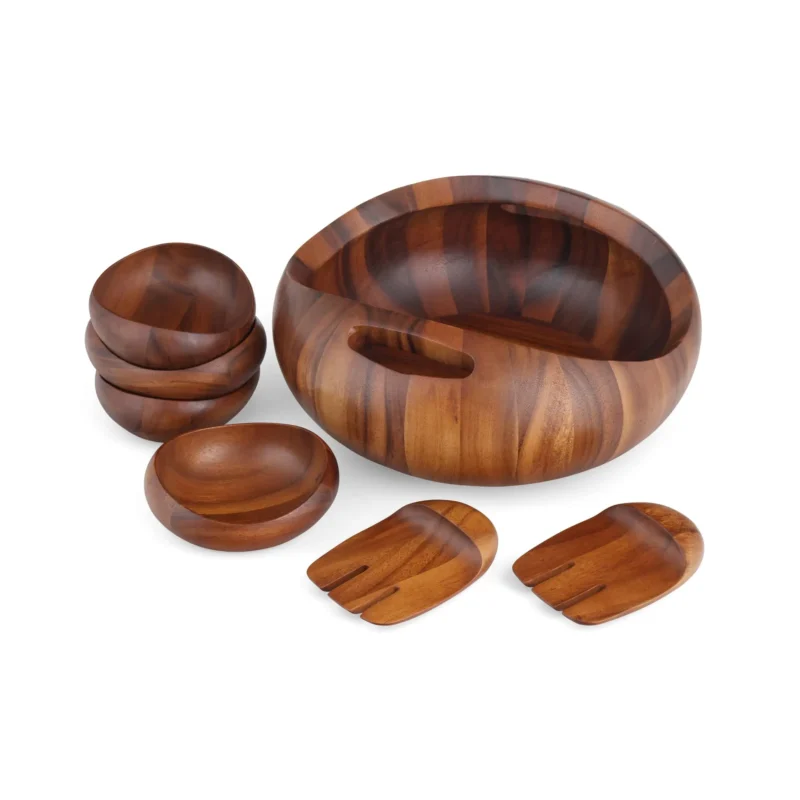
At Natural Utensils, our handcrafted pieces are made from natural wood and bamboo with everyday kitchen use in mind. Browse our wooden utensils collection for plates, bowls, and serving pieces, or explore the Acacia wood shaped tray set and the handmade wooden serving bowl for entertaining. Looking for a thoughtful present? See our wooden gift sets.
You may also like our related guide: Are Wooden Kitchen Utensils Safe? The Truth About Wood vs. Plastic.
Frequently Asked Questions
Are wooden plates safe to eat off every day?
Yes. A solid hardwood plate with a food-safe finish is safe for daily use when you hand wash it, dry it promptly, and oil it regularly.
Do wooden plates harbor bacteria?
Any surface can harbor bacteria if it is not cleaned. Wood’s natural structure and properties mean it can perform well in food-safety tests, but you still need to wash and dry it after every use, and replace plates with deep cracks.
Can you put wooden plates in the dishwasher?
No. The heat, detergent, and prolonged moisture will cause warping, cracking, and finish damage. Always hand wash.
Are wooden plates safe for hot food?
Yes for most warm and hot dry foods. Avoid leaving very hot, oily, or soupy foods sitting on the plate for long periods.
What finish is safe for wooden plates?
Food-grade mineral oil, beeswax, or a blend of the two are the most common and trusted finishes for wooden tableware.
How often should I oil my wooden plates?
About once a month for regular use, or any time the wood looks dry or lighter in color.
Are bamboo plates safer than wooden plates?
Neither is automatically safer. What matters is construction quality, the adhesives and finish used, and how you care for the plate.
Final Thoughts
So, are wooden plates safe? Yes. When you pick a quality hardwood or bamboo plate with a food-safe finish and give it simple, consistent care, a wooden plate is a safe, durable, and beautiful way to serve food. It is also a small step toward a more sustainable kitchen.
Ready to upgrade your table? Shop handcrafted wooden products at Natural Utensils and enjoy free worldwide shipping on orders over $75 USD.